
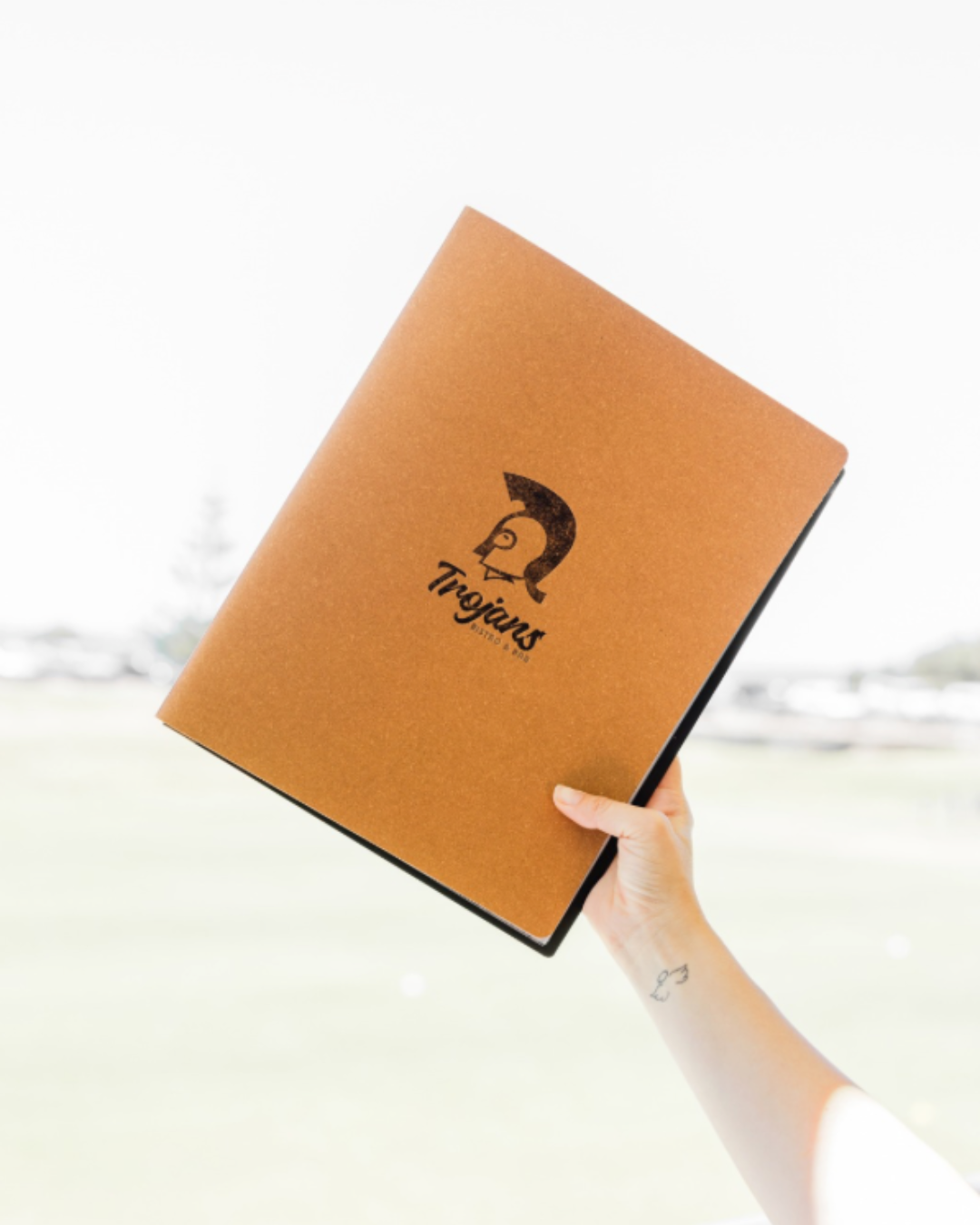
Beer gardens, rooftop bars, and footpath tables all share the same problem indoor dining rooms don't have to think about: the weather. Sun, wind, rain, and the odd spilt drink all take a toll on a menu a lot faster outdoors than they would sitting on a table inside.
If you've ever picked up an outdoor menu with curling pages, faded print, or a cover that's started to warp, you've seen the result of choosing a format built for indoor use and putting it outside anyway. The good news is that outdoor durability is mostly a materials and maintenance problem - and it's one that's easy to plan around from the start.
What Actually Damages Outdoor Menus
Before choosing materials, it helps to know what you're actually protecting against:
-
UV exposure fades printed colour and can dry out and crack certain materials over time, particularly in direct sun on a rooftop or footpath.
-
Moisture - rain, condensation from drinks, or general humidity - is usually the biggest culprit behind warped pages and swollen covers.
-
Wind is a practical, everyday problem for footpath dining in particular. Loose pages and light menus are the first thing to end up on the ground or blown into the next table.
-
Frequent handling outdoors tends to be rougher than indoors - menus get stacked, left in the sun between services, and handled by more hands per sitting.
Choosing the Right Format for Outdoor Use
Not every menu cover in a venue's range needs to handle outdoor conditions - but the ones that live outside should be chosen with these conditions in mind, rather than just matched to the indoor look.
Bistro menu covers are a solid fit for most alfresco settings. They're built to handle daily handling, and pairing them with a copy-safe PVC sleeve gives the printed page itself protection from moisture and spills without needing to reprint after every shift.
Timber menus can work well outdoors too, particularly in beer gardens and rooftop venues going for a natural, relaxed look - but it's worth talking to us about finish and sealing if the menu is going to sit in direct sun or rain for extended periods, rather than assuming any timber product will perform the same way outside as it does indoors.
Clipboards are a practical choice for footpath dining specifically. They're light enough to carry easily but the clip keeps pages secured against wind - a small detail that matters more outdoors than it ever does inside.
Leather menu covers, by contrast, are generally better suited to indoor use. Leather doesn't respond well to prolonged sun or moisture exposure, so if your venue has both an indoor dining room and an outdoor area, it's worth using leather where it's protected and a more weather-resistant option outside.
A Few Maintenance Habits Worth Building In
Even the right material benefits from a bit of routine care in an outdoor setting:
-
Bring covers inside overnight where possible, rather than leaving them out in dew or overnight rain.
-
Wipe down covers at the end of service rather than letting spills sit until the next clean.
-
Rotate stock if you have both indoor and outdoor menus, so the outdoor set isn't taking all the wear.
Getting It Right from the Start
The easiest way to avoid reprinting and replacing outdoor menus every few months is choosing the right format before you order, rather than retrofitting a solution once things start to wear.
Our bistro menu covers and clipboards are both practical starting points for alfresco areas, and our accessories range includes replacement sleeves if your current setup needs protecting rather than replacing outright.
If you're planning a new outdoor area or refreshing an existing one, get in touch and tell us a bit about the space - we can help you pick a setup that's actually built for where it's going to live.